

Our Philosophy
With respect for people, animals, and nature
All our items are consistently made from vegetable-tanned leather.
Today, vegetable-tanned leather has become a rare luxury because, due to the high labor and cost involved in its production, only a few tanneries worldwide still use this human and environmentally friendly method.
Pure, natural tanning agents such as Valonea pods, Mimosa bark, Oak bark, or Tara fruit, combined with a great deal of craftsmanship, result in a unique leather that meets the highest standards of quality and sustainability: a softer and warmer feel, a gentle, natural leather scent, an unadulterated surface structure, exceptionally brilliant colors, and, last but not least, the best possible breathability and skin compatibility (suitable for allergy sufferers) due to the chrome-free vegetable tanning distinguish our leather from conventional leather.
Learn more here: Our Leather
OUR DESIGN
Tranquility through the essential
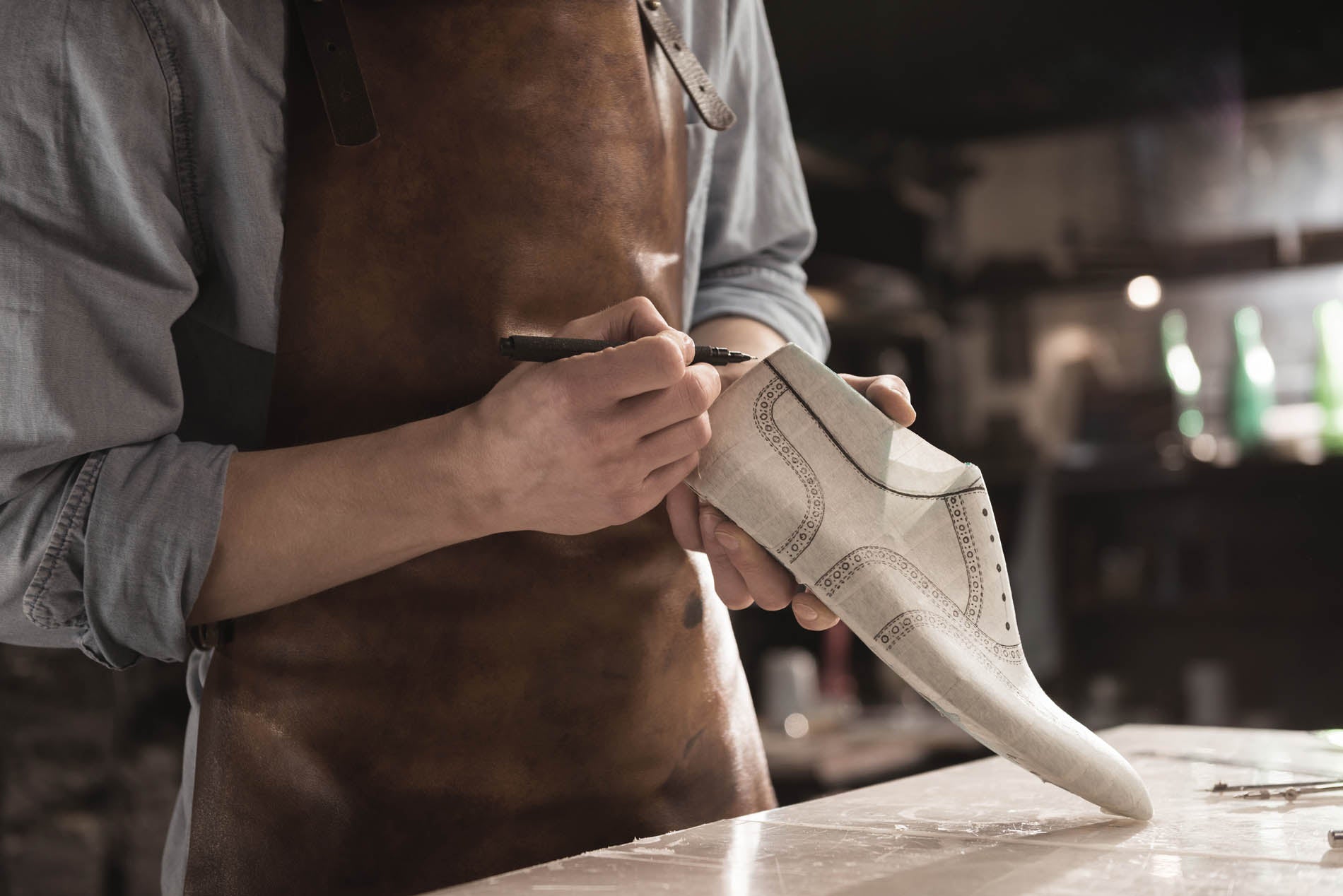
For us, it's about creating timeless pieces that outlast seasonal trends. Good design expresses itself in simplicity and clarity. High-quality material and workmanship, color, form, and function must work together perfectly, because good style ultimately relies on functionality, not decoration.
Every small detail is important, because our products should not only look good but also feel good when they accompany us through the day.
As early as 2004, when sustainability was not yet a fashionable and greenwashing term, we firmly believed that quality, timeless design, and good craftsmanship lead to classics that one loves and cherishes for a lifetime.
Investing in a few, but good quality items that can all be combined with each other ultimately not only brings peace of mind (and closet) but also brings about a change in the fashion industry.
SUSTAINABILITY IS A JOURNEY
WE HAVE MADE IT OUR MISSION TO FIND THE BEST MATERIALS CURRENTLY ON THE MARKET IN TERMS OF QUALITY AND SUSTAINABILITY
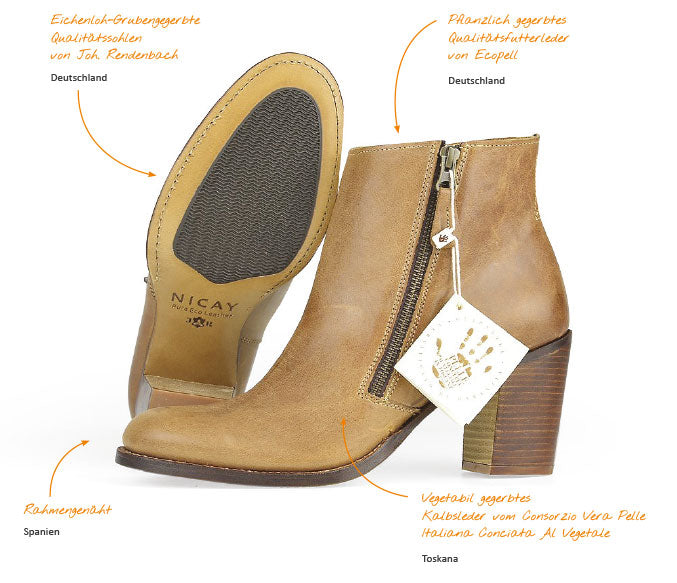
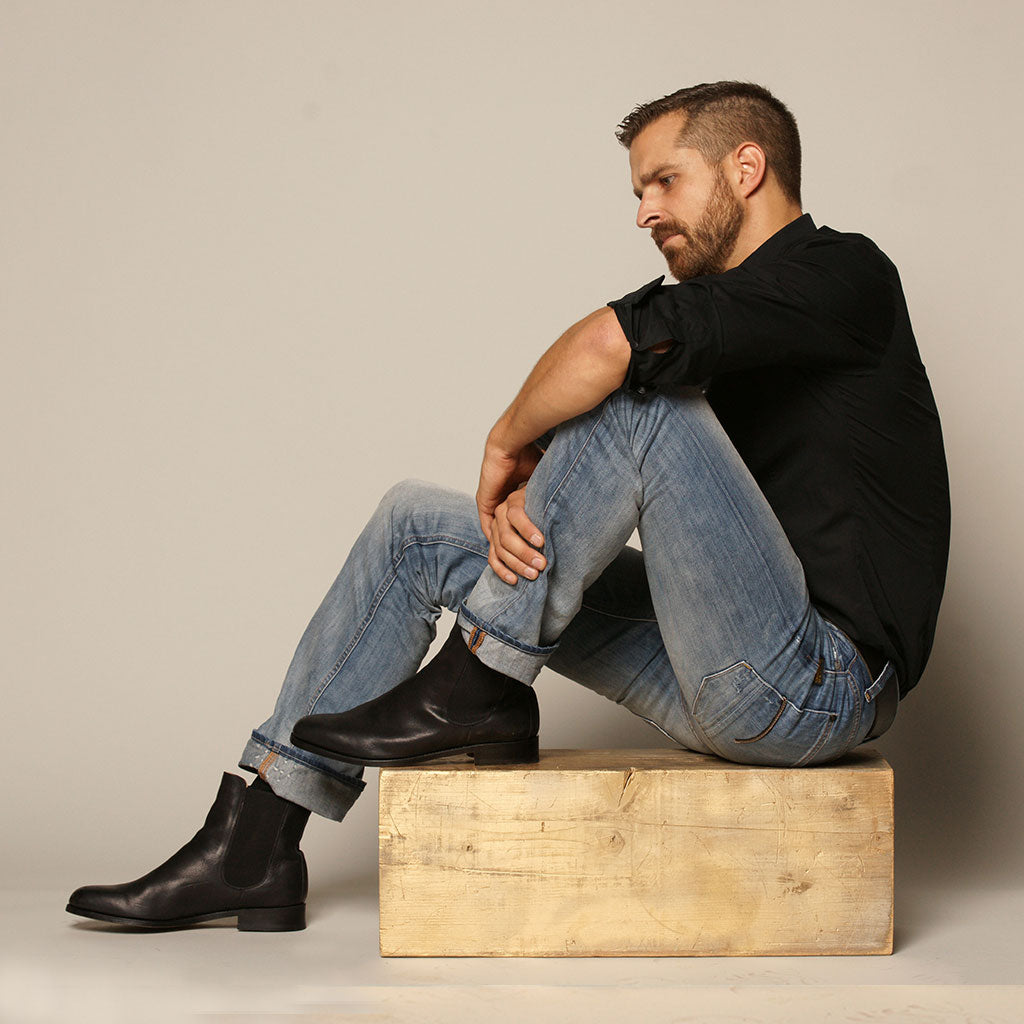
Take, for example, our Goodyear-welted ankle boots: The upper leather, vegetable-tanned calfskin, comes from Tuscany from the Consorzio Vera Pelle Italiana Conciata Al Vegetale.
We source the glove-soft, also vegetable-tanned and breathable lining leather from the family business Ecopell in Southern Germany.
The high-quality leather soles and heel blocks – elaborately produced over up to 9 months using the original oak bark pit tanning process – come from the traditional company Joh. Rendenbach in our hometown of Trier. The factory in Spain, which manufactures shoes and boots, has specialized in the production of Goodyear-welted footwear for over 30 years.
Sustainability is a long, often stony path, but we love the journey: In 20 years of working with sustainable materials, we have learned that sustainability has no absolute claim.
Every day we learn more and question the actual sustainability of a material.
ABOUT THE USE OF LEATHER
In this regard, I have been in a conflict since the founding of NICAY: On the one hand, I love leather because it is a natural, wonderful material that cannot be replaced by any other material in terms of its positive properties, especially in shoes. While vegan leather is animal-friendly, it has disadvantages in terms of durability and environmental compatibility. Most variants are made of plastics such as PU (polyurethane) or PVC, which are petroleum-based, difficult to recycle, and not biodegradable. In addition, they are generally not very breathable and tend to crack or peel quickly due to their surface coating.
On the other hand, I don't want an animal to have to die for me or for fashion. For this reason, I am also a vegetarian, an absolute opponent of fur, and have been active in animal welfare since my student days. However, I am realistic enough to know that there have always been meat-eaters and there always will be.
It remains to be hoped that at least attention will be paid to meat from animal-friendly farming and that the dumping at low prices will finally stop, which ultimately harms everyone: humans, nature, and animals.
The leather we use is a by-product of the food industry. No animal is slaughtered for leather; the hide is left over.
The same applies to the salmon skins we use. The fish skins come from certified organic salmon farms in Ireland and are a so-called "waste product" of the food industry. The same goes for the cow horn from which our horn jewelry is made.
Our leather manufacturer Ecopell in Southern Germany uses hides from animal-friendly farming in Bavaria. As one of the few manufacturers worldwide, Ecopell leather is certified by Biokreis and IVN Naturleder, and animal-friendly farming is a prerequisite for these certifications.
Finally, I would like to say that I do not take the use of an animal product lightly on any given day. However, what I personally find worse than reusing an animal hide is simply throwing it away.
Nicole Aytar